
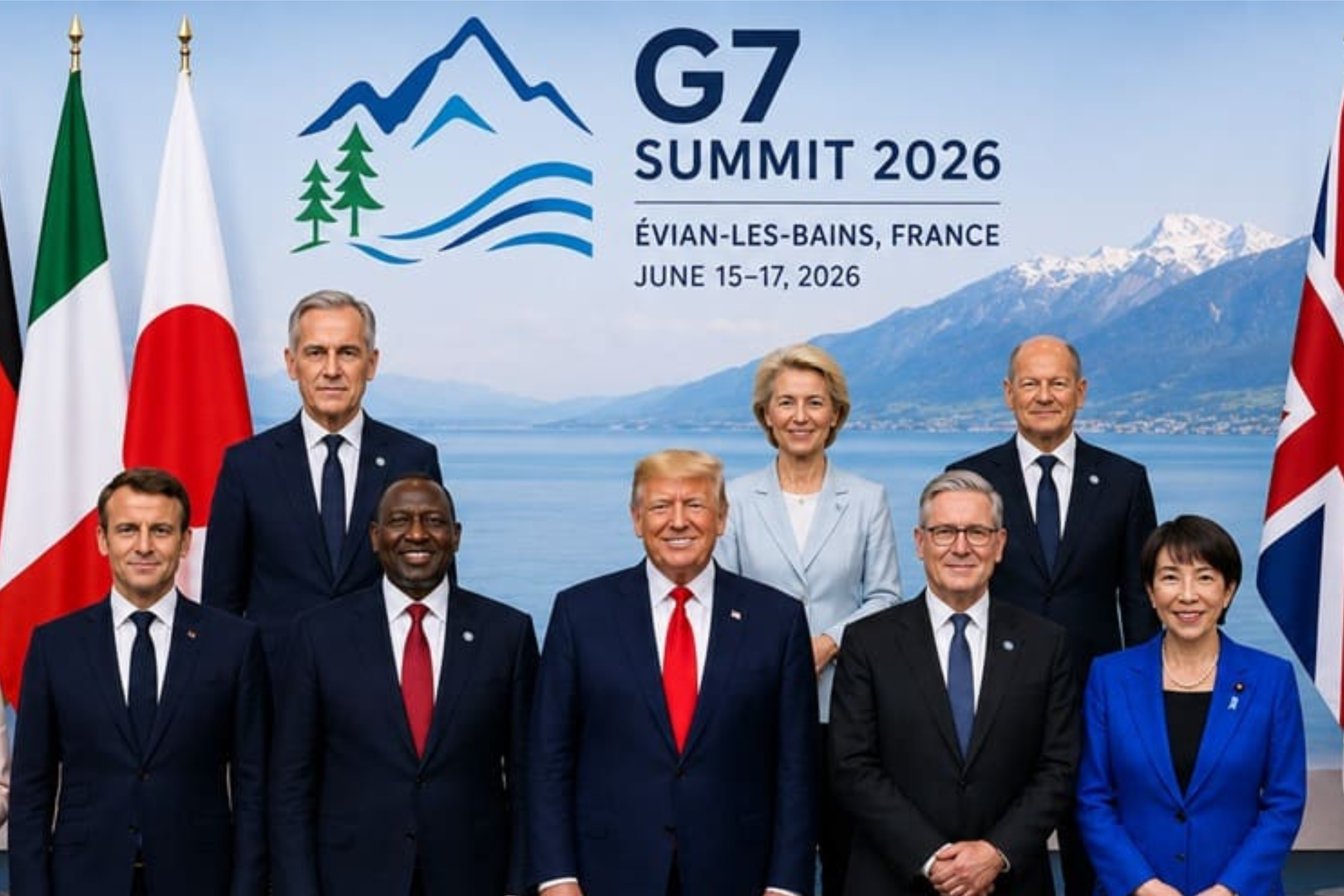
The 2026 G7 Summit in Évian-les-Bains, France, may ultimately be remembered as one of the most consequential gatherings of world leaders in recent years. Against a backdrop of Middle East tensions, uncertainty surrounding Iran, growing concerns over China’s control of critical minerals, and ongoing support for Ukraine, leaders from the world’s largest advanced economies faced a difficult challenge: how to restore stability while preparing for a rapidly changing geopolitical landscape.
What emerged from the summit was more than diplomatic symbolism. It was a clear signal that economic security, energy resilience, and supply chain independence have become central pillars of global strategy. The discussions revealed a world increasingly focused on reducing vulnerabilities, securing essential resources, and adapting to a new era of geopolitical competition.
The Iran Crisis Continues to Influence Global Markets
One of the most closely watched topics at the summit was the ongoing situation involving Iran. While world leaders welcomed progress toward a potential peace framework, concerns remain about long-term stability in the region.
The Middle East remains a critical artery for global energy supplies. Any disruption in the region has immediate implications for oil prices, shipping routes, inflation, and economic growth. The Strait of Hormuz, one of the world’s most important maritime trade corridors, has been at the center of international attention throughout the crisis. A reopening and stabilization of the route could help ease pressure on global energy markets, but policymakers remain cautious given the fragile nature of the current diplomatic progress.
For businesses and investors, the lesson is clear: geopolitical conflicts are no longer distant political events. They directly influence supply chains, commodity prices, consumer spending, and corporate strategy.
The Bigger Story: Why Critical Minerals Dominated the G7 Agenda
Although the Iran crisis captured headlines, many analysts believe the most significant outcome of the summit was the G7’s coordinated effort to reduce reliance on China for critical minerals.
These minerals – including lithium, nickel, rare earth elements, cobalt, and graphite – are essential for modern technologies. Electric vehicles, smartphones, semiconductors, renewable energy infrastructure, defense systems, and artificial intelligence hardware all depend on them.
For years, China has built a dominant position in mining, refining, and processing many of these strategic resources. Today, China controls a substantial share of global processing capacity for rare earth minerals, giving it enormous influence over industries worldwide.
This dependence has increasingly worried Western governments.
A disruption in supply could impact everything from electric vehicle production to military readiness and clean energy development.
The New G7 Critical Minerals Alliance
In response, G7 leaders announced plans to strengthen cooperation through a new critical minerals alliance.
The initiative focuses on several key objectives:
- Diversifying mineral supply chains
- Expanding domestic production among allied nations
- Increasing strategic stockpiles
- Accelerating recycling programs
- Encouraging private-sector investment
- Improving supply chain monitoring and crisis response
The alliance aims to reduce dependency on any single supplier while creating more resilient global supply networks. Governments are also exploring incentives such as subsidies, long-term purchasing agreements, and public-private partnerships to accelerate development.
This marks a significant shift in economic policy. Resource security is no longer viewed solely as a commercial issue, it is increasingly considered a matter of national security.
See Also: Argentina vs Algeria World Cup 2026: Messi’s Historic Hat-Trick Powers Argentina to a Dominant Victory
Why Businesses Should Pay Attention
Many companies still view geopolitical developments as issues reserved for governments and policymakers. That perspective is becoming outdated.
Manufacturers, technology firms, automakers, renewable energy companies, and logistics providers all face growing exposure to supply chain disruptions.
The G7’s discussions reflect a broader trend toward “economic security,” where governments seek greater control over critical resources, technology, and infrastructure.
Companies that proactively diversify suppliers and strengthen procurement strategies will likely be better positioned to manage future disruptions.
Those that remain heavily dependent on concentrated supply chains may face increasing risks in the years ahead.
Ukraine Remains a Key Focus
The summit also reinforced ongoing support for Ukraine.
G7 leaders expressed continued commitment to helping Ukraine defend itself while maintaining pressure on Russia through sanctions and diplomatic measures. Recent battlefield developments and shifting political dynamics have strengthened discussions around long-term support mechanisms.
The Ukraine conflict continues to influence energy markets, defense spending, agricultural exports, and global economic stability.
As a result, it remains a major factor shaping international economic policy.
Artificial Intelligence Enters the Geopolitical Conversation
Another notable theme at the summit was artificial intelligence.
Global leaders met with prominent technology executives to discuss AI governance, accountability, misinformation risks, and the future of innovation.
The conversation highlighted how AI has evolved from a purely technological issue into a strategic geopolitical priority.
Countries increasingly view AI leadership as a key determinant of future economic competitiveness. At the same time, governments are grappling with questions about regulation, ethics, national security, and workforce transformation.
The intersection of AI, semiconductors, energy resources, and critical minerals demonstrates how deeply interconnected modern technological competition has become.
The Rise of Economic National Security
Perhaps the strongest takeaway from the 2026 G7 Summit is the emergence of economic national security as a defining global trend.
For decades, globalization prioritized efficiency and cost reduction. Today’s environment emphasizes resilience, diversification, and strategic independence.
The discussions surrounding Iran, Ukraine, China, critical minerals, and AI all point toward the same reality:
Governments are increasingly willing to intervene in markets when critical resources, technologies, or supply chains are involved.
This shift is likely to influence trade policy, industrial strategy, investment decisions, and international relations for years to come.
Final Thoughts
The 2026 G7 Summit was not simply another diplomatic gathering. It offered a glimpse into the future of global economics and international politics.
While the Iran situation remains an immediate concern, the longer-term story may be the growing effort by major economies to reduce strategic vulnerabilities and secure access to the resources that will power the next generation of technology.
Critical minerals, artificial intelligence, supply chain resilience, and economic security are no longer niche policy discussions. They are becoming the foundation of global competition in the 21st century.
For businesses, investors, and policymakers alike, understanding these shifts will be essential to navigating an increasingly complex world economy.

Pingback: Cuba Says US Talks Stall Ahead of UN Embargo Debate (2026)